
Industry Experts
Cold Stores
Why is humidity control important to Cold Stores?
Excess humidity is a frequent issue in cold stores and is typically managed using a dedicated dehumidification system. The primary source of fluctuating humidity levels is damp external air, which commonly enters through doorways, air ducts, and loading bays. When moisture levels rise too high, the excess water vapour condenses on surfaces, potentially leading to mould growth, product spoilage, and ice formation in sub-zero environments.Â
This ice build-up not only threatens the structural integrity of packaging materials but also poses safety risks for personnel accessing the area. Additionally, accumulated ice on air conditioning coils can reduce system efficiency, triggering frequent defrost cycles and causing operational downtime. Maintaining optimal humidity levels is therefore critical – and understanding how moisture enters the space is the first step.Â
To effectively manage this, many cold storage facilities contain air locks and loading bays to minimise the air exchange entering the cold room. These are typically the primary locations for installing dehumidification systems; alternatively, units may be placed inside the cold room itself. Desiccant dehumidifiers are generally preferred in these environments, as they maintain high performance even in low temperatures, unlike refrigerant-based systems.Â
This is why desiccant dehumidifiers are especially well-suited to cold storage applications. In a desiccant dehumidification system, moisture is removed by adsorption using silica gel material embedded in a rotating rotor. As humid air passes through the rotor, the moisture is captured by the silica, effectively drying the air. The adsorption properties of silica are unaffected by temperature, and the reason why desiccant units can provide consistent dehumidification in all conditions.Â
 However, not all desiccant units are designed to perform in sub-zero conditions. Â
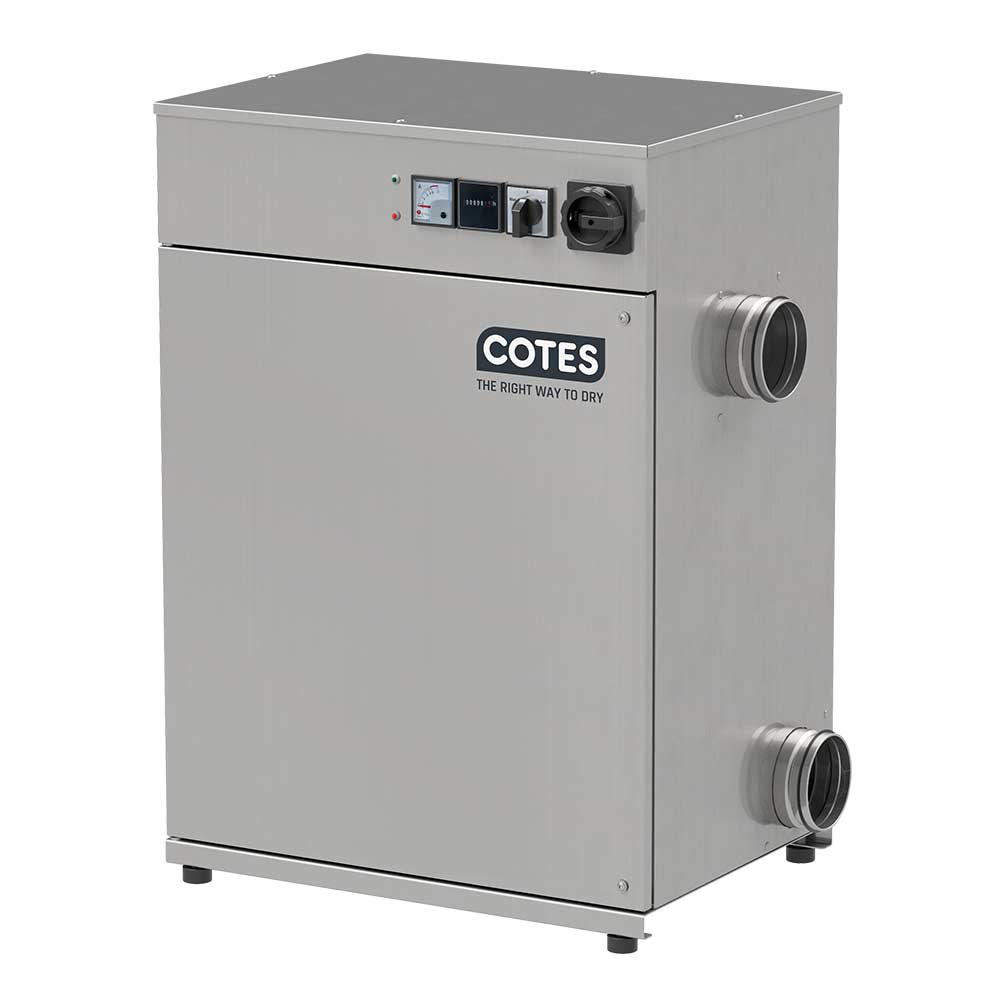
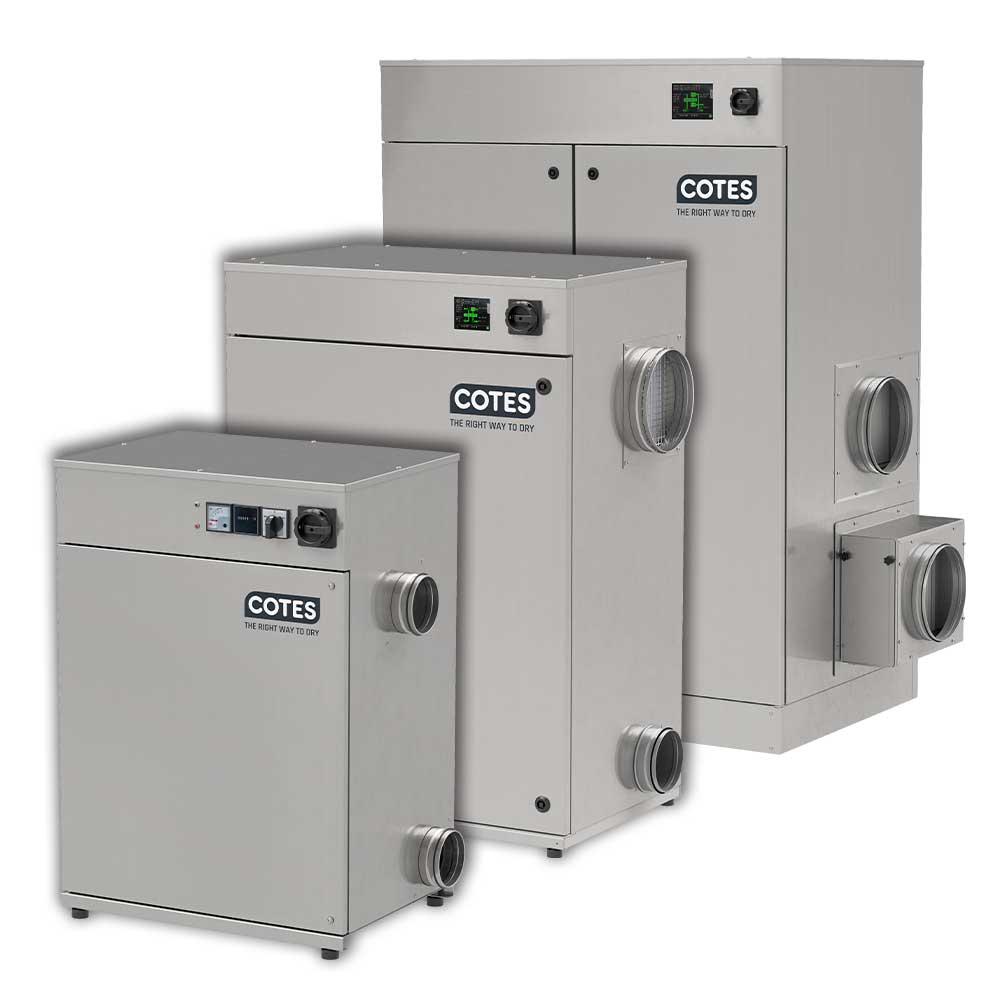
Standard desiccant dehumidifiers, such as the Cotes Modular Desiccant Dehumidifier, can operate in temperatures down to 0° – making them ideal for refrigeration units and areas with low or unstable temperatures.Â
Cold store dehumidifiers, on the other hand, are specifically engineered to handle extreme conditions below 0°C. While they use the same desiccant rotor technology, their software and construction are optimised to function in freezing conditions.Â
We understand Cold Stores
Free and fast response to all enquiries.
From a team with decades of experience.
bespoke turnkey solutions
We support you every step of the way.
